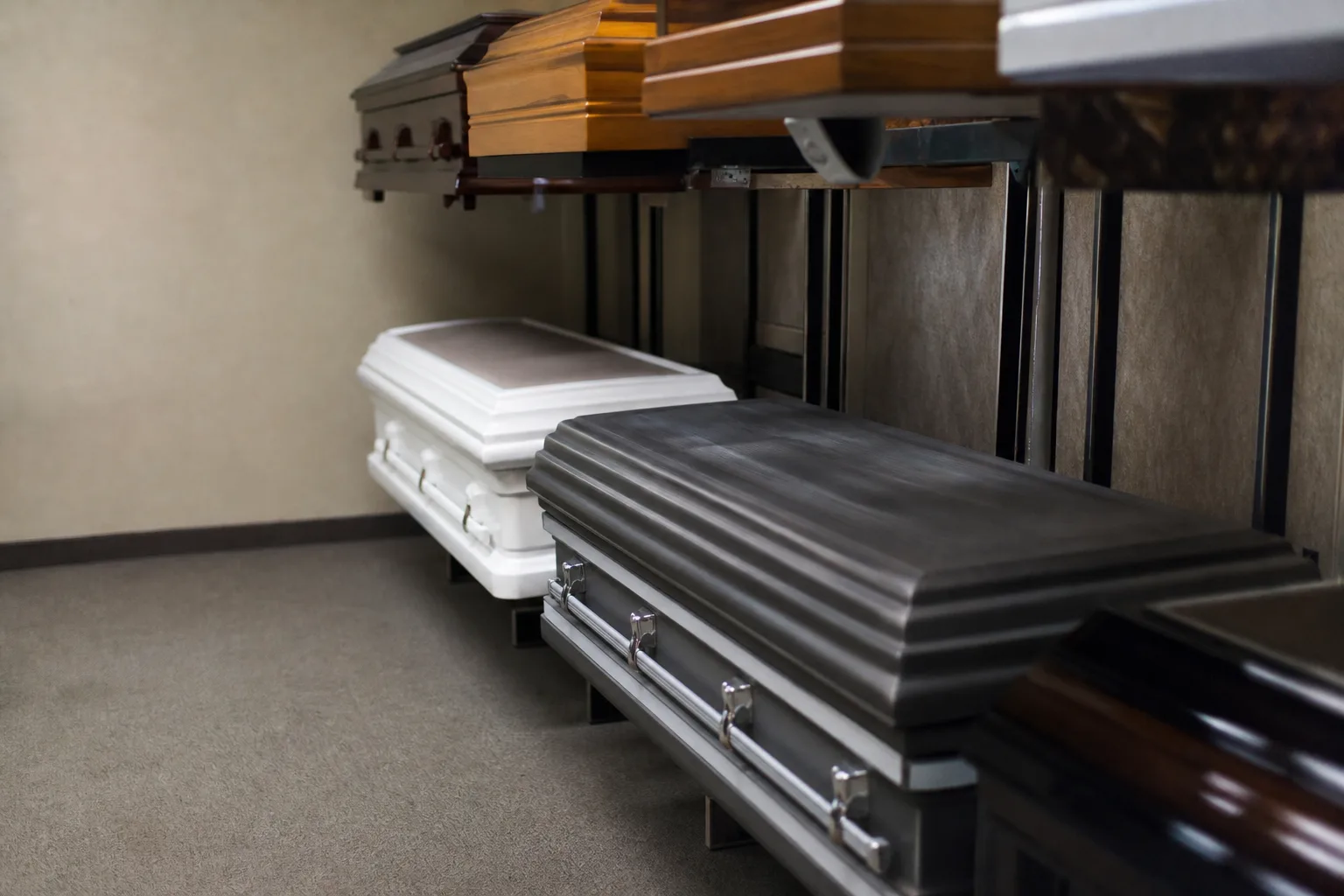
Rental shells with removable inserts, minimum crematory containers, fiberboard, and shrouds at conservation grounds, and the questions that separate a real option from a sales line.
A family that wants a viewing does not automatically need to buy a casket, and a family that wants no viewing at all may need less than the funeral home's display room suggests. Four arrangements come up over and over on general price lists: the rental ceremonial casket with a removable insert, the minimum container a crematory will accept, the cloth-covered fiberboard box, and the shroud or plain wooden box that conservation burial grounds are built around. Each is legitimate. Each has a detail that decides whether it works for you.
1. The rental shell and the insert that does the real work
A rental casket is a finished hardwood or metal shell with a hinged bed inside. The body is placed in a separate insert, usually a cardboard or unfinished wood tray with a cloth liner and its own lid, and that insert slides into the shell for the visitation and service. Afterward the insert comes out and goes to the crematory or the grave, and the shell is cleaned and used again. Ask how the insert is priced, because on many lists the rental fee and the insert are separate line items, and the second one is easy to miss.
On price, the useful comparison is not the rental fee alone but the rental fee plus the insert, set against the cheapest casket the same firm will sell you. Sometimes renting saves a great deal. Sometimes, once the insert is added, it lands close enough to a cloth-covered box that the choice becomes purely about appearance for the two hours people are in the room. Both answers are fine. You just want to see them side by side, in writing, before anyone starts arranging flowers.
2. What the crematory will actually take
Crematories require a rigid, combustible, leak-resistant container with a full cover, handled by staff without difficulty. That is the substance of nearly every operating policy, and the practical result is a corrugated cardboard box, a pressed-board tray with a lid, or a plain pine box. Metal caskets and any hardware that will not burn are refused. No state requires a casket for cremation, and the Federal Trade Commission, which oversees how funeral providers disclose and sell these goods, is the body whose remit covers this exact ground. Ask the funeral home for the crematory's own written specification rather than a summary of it.
3. Cloth-covered fiberboard, and what it is not
Fiberboard is compressed wood fiber, and a cloth-covered fiberboard casket is that material with a fabric exterior, a cloth interior, and rope or recessed handles. It looks, from six feet away in a dim room, much like a finished casket. It is the least expensive item on most display walls that still reads as a casket, and it is accepted for cremation and for burial in most cemeteries that require a grave liner or vault, since the liner is doing the structural work below ground. Check the weight rating and check whether the handles are load-bearing or decorative, because pallbearers will find out either way.
4. Shrouds and unfinished wood at conservation grounds
Conservation and natural burial grounds generally prohibit vaults, liners, embalming with formaldehyde, and any container that will not break down. What they allow is narrow and specific: a cloth shroud of natural fiber, often with a rigid board beneath it for carrying, or a box of unfinished softwood joined with wooden pegs or non-plated screws. Wicker, seagrass and bamboo are common. Ask for the burial ground's written rules before you buy anything, since some accept a shroud alone and others require a board, and a few set a maximum dimension because graves are dug by hand.
5. The five things a careful reader verifies
Get the general price list on paper and find the container section yourself rather than being walked through it. Confirm that a rental fee and an insert are shown separately or explicitly bundled. Confirm the crematory's minimum container in the crematory's own words. Confirm whether the cemetery requires a vault, and if so, that the vault is priced separately. And confirm, if you are buying a container elsewhere, that the funeral home will accept it without a handling fee, which it is required to do.
None of these choices is a compromise in itself. They are four different ways of solving the same short problem, and the one that fits is usually obvious once the paperwork is in front of you.